Chimney sweep service
What a proper chimney cleaning covers, top to bottom.
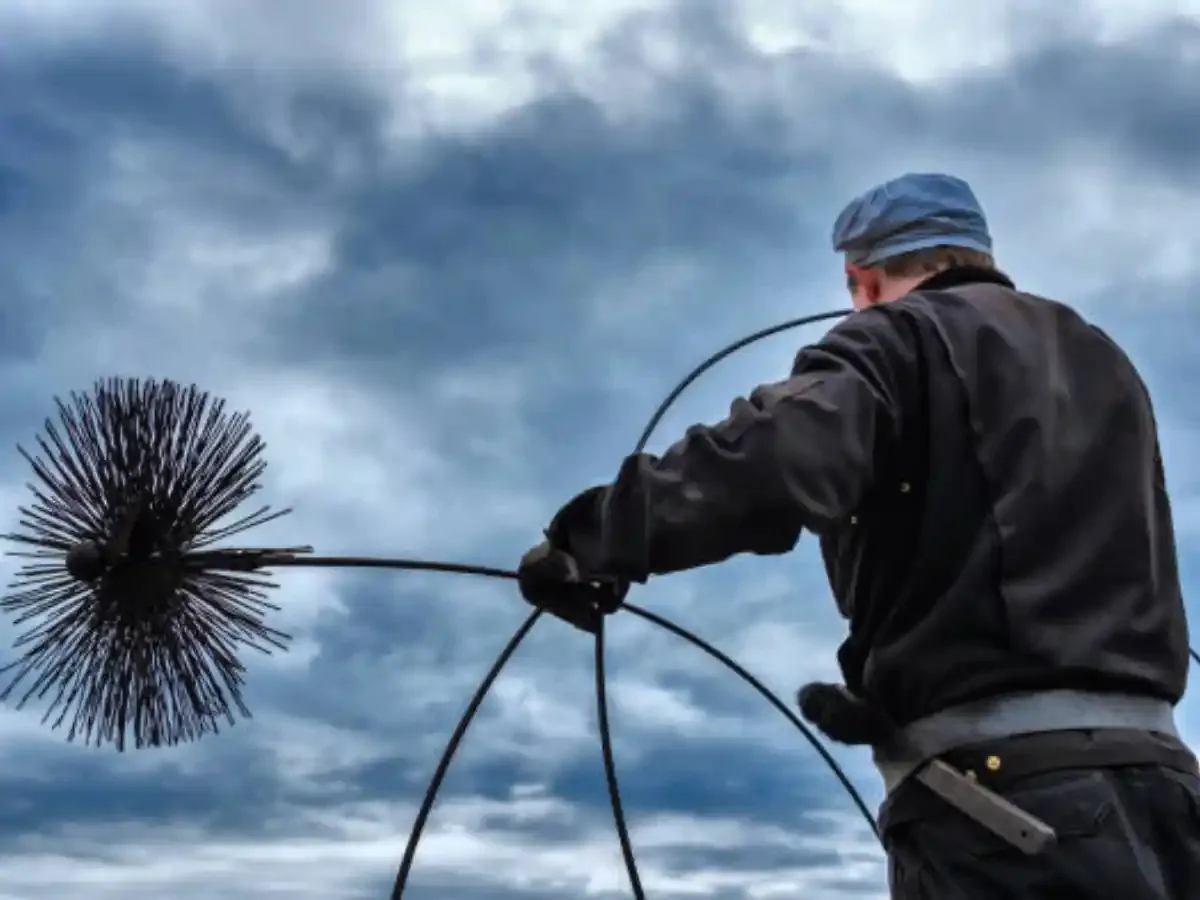
- Flue brushed from the top or the bottom
- Smoke shelf and firebox vacuumed out
- Damper and cap checked on the way
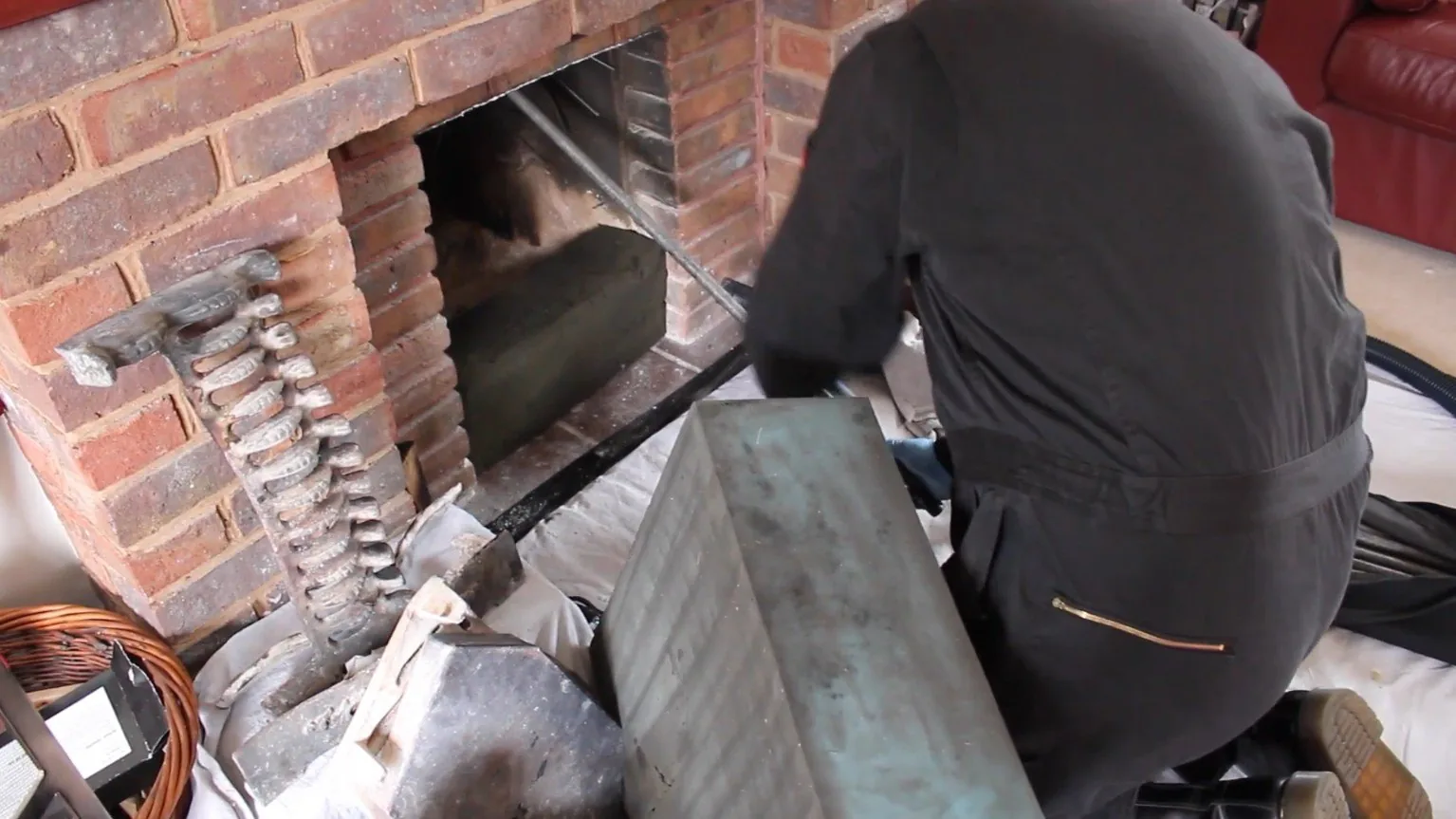
Chimney cleaning in San Diego is mostly about what builds up quietly between uses. Every fire leaves creosote, a residue that condenses on the cooler flue walls and is highly combustible, according to the Chimney Safety Institute of America (CSIA). Add leaves, nesting material and soot, and a flue that looks fine from the hearth can be anything but.
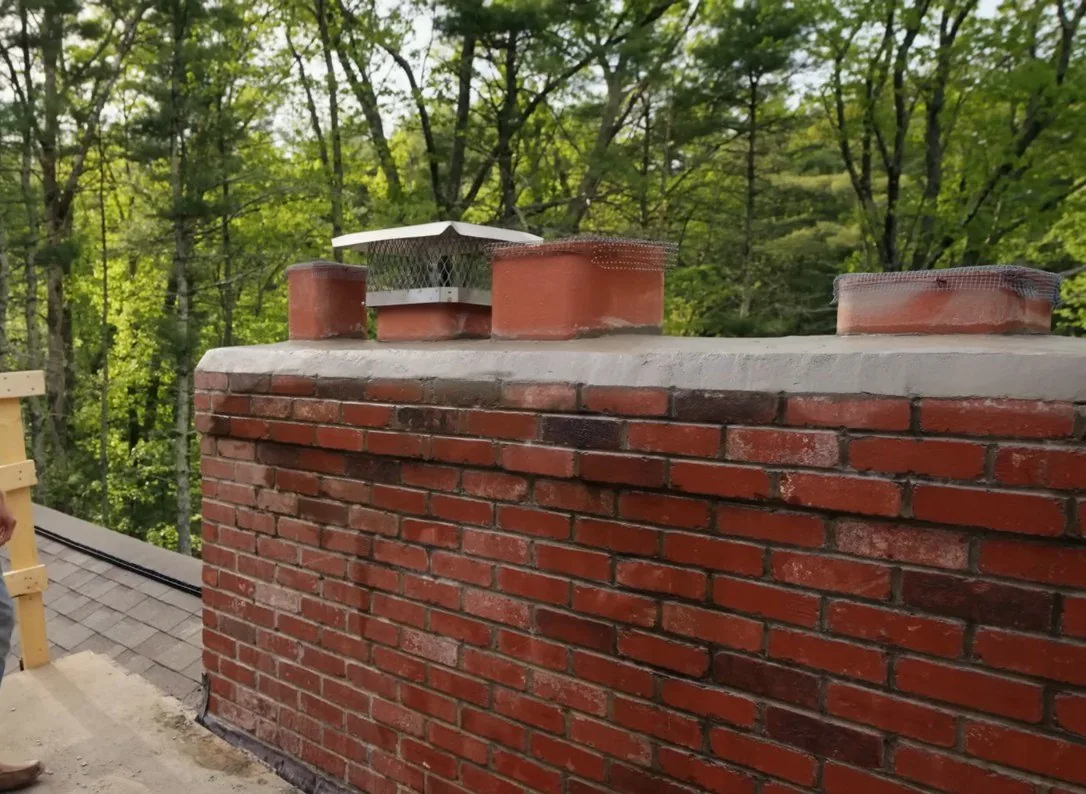
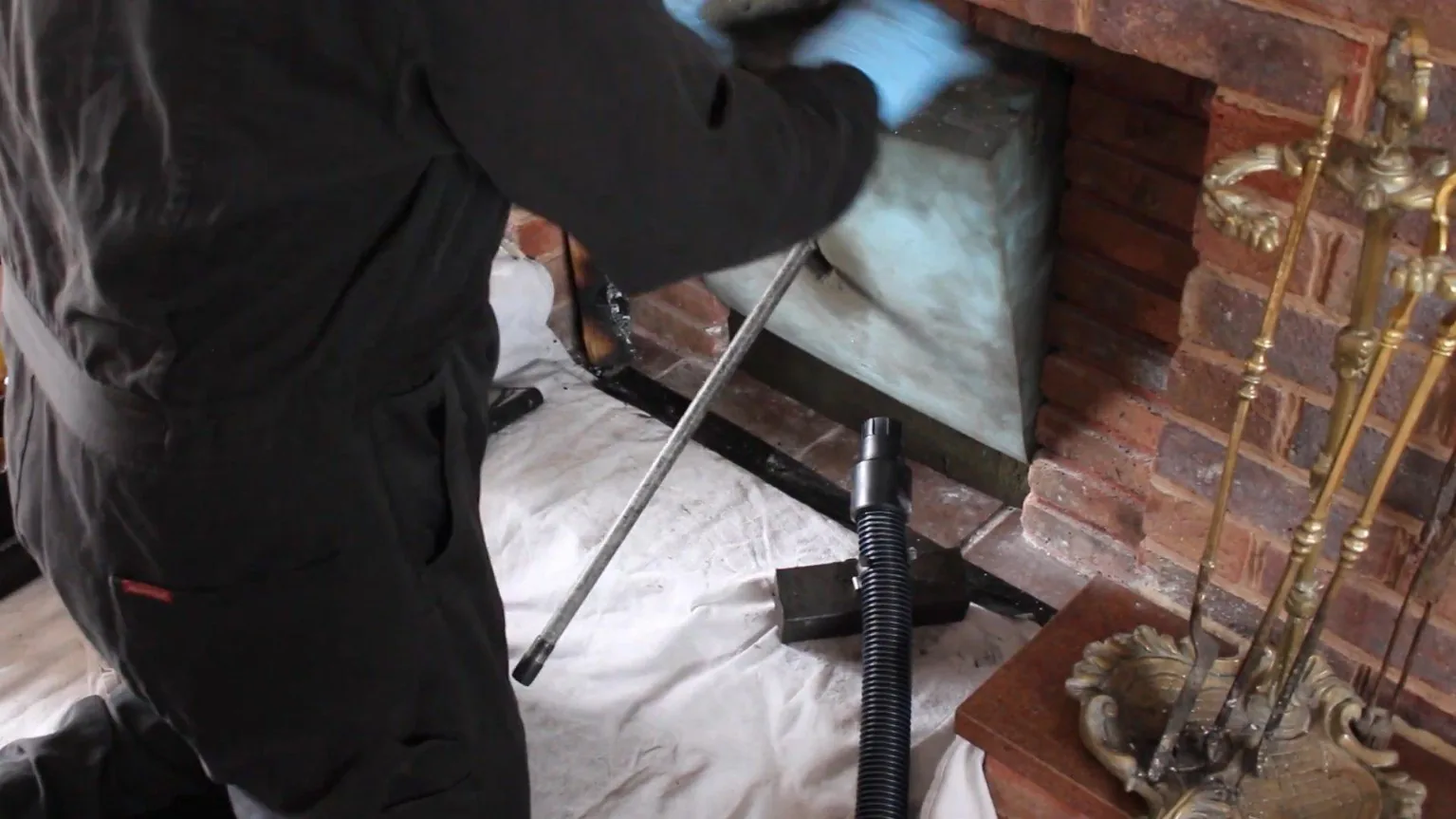
We brush the flue, clear the smoke chamber and smoke shelf, and vacuum the firebox so nothing ends up on your floor. While we're in there we look at the liner, the damper and the chimney cap, because a sweep is the easiest time to spot a problem. If we see damage, we'll recommend an inspection or repair and explain why.
Fireplace smells smoky or drafts poorly?
Hold off on lighting it and send us a request. We'll call to set a time.
What's included in a chimney cleaning
The goal is a clean flue and a clear picture of its condition, so the work covers the whole path the smoke travels.
Flue brushing
Rotary or manual brushes sized to your flue tile or metal liner, run the full height of the chimney to remove soot and creosote.
Smoke chamber & shelf
The angled space above the damper is where debris and nesting material pile up. We clear it by hand and vacuum.
Firebox & damper
Ash and debris removed, the damper opened and closed to make sure it seals and moves freely.
Notes on what we saw
You hear what condition the flue, cap and crown were in, and whether anything should be looked at more closely.
Not all creosote is the same
Flaky, sooty buildup
Dry and crumbly. It brushes out readily, and CSIA guidance is to sweep a masonry fireplace once the sooty layer reaches about 1/8 inch.
Tar-like or sticky
Forms when smoke cools too quickly, often from damp wood or a fire starved of air. Takes more work to remove.
Shiny, hardened glaze
The hardest form to clear. CSIA notes chemical treatments may be needed first, but they aren't a substitute for mechanical cleaning.
Signs your chimney is due for a sweep
You don't have to wait for the yearly visit if you notice any of these:
- A smoky smell in the roomEspecially noticeable on damp, cool days when the marine layer sits over the coast.
- Black flakes in the fireboxPieces of creosote breaking loose from the flue walls.
- Fires that are hard to start or keep goingA restricted flue doesn't draw well, so the fire smolders.
- Smoke drifting into the roomCould be buildup, a nest or a damper problem, all things a sweep will reveal.
- Animal noises or debrisBirds and rodents like idle chimneys; nesting material is a fire risk on its own.
Safety first. Chimney-cleaning logs and powders don't replace a sweep; CSIA is clear they can't stand in for brushing and a proper look inside. And never climb onto a roof to peer down a flue yourself.
How we handle chimney cleaning
Your room stays clean
Drop cloths and vacuums go down before the brushes come out, and we clean the hearth before we pack up.
Inspection built in
The sweep doubles as a close look at the liner, damper and cap, so you hear about problems early.
Price before we start
If anything beyond the cleaning is needed, it's quoted in writing and you decide.
Booked around San Diego seasons
Late summer and early fall are the easy time to get ahead of winter fires and rain.